

Meta-modeling-driven optimization is a very powerful method to achieve a solution very close to the global optimum and in much less time. It is especially useful for studies involving large computation times (such as computational fluid dynamics), data acquired from empirical testing (such as sensors and testing), and non-convex functions. In previous articles, we have seen how the Design of Experiments component inside Iliad can be used for Response Surface Driven optimization. This approach, termed static RSM-driven optimization, offers complete control over the number of design points or analyses that need to be evaluated. But an Engineer may not always be sure of how many design points to begin with; too few and the optimum may not be achieved, too many and the study would take an unreasonable amount of time. Another concern is that of accuracy since response surface-driven optimization involves solving an approximate problem and hence the optimum point is approximate too. What if we could use Machine Learning to tell us how many points to evaluate and what those should be so as to achieve an accurate global optimum faster? Another way of phrasing this would be achieving the optimum solution using an optimized procedure. The Response Surface Approximated Optimization (RSO) component in Iliad is built to do exactly that.
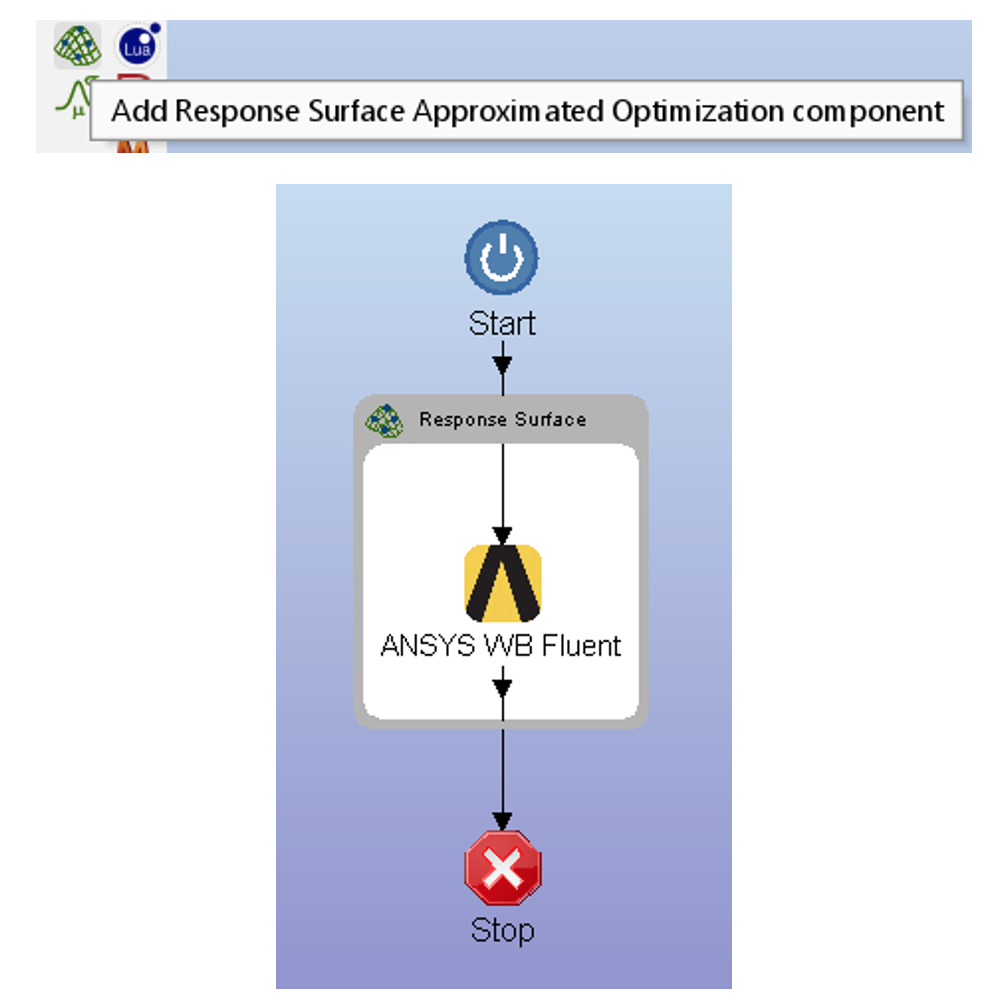
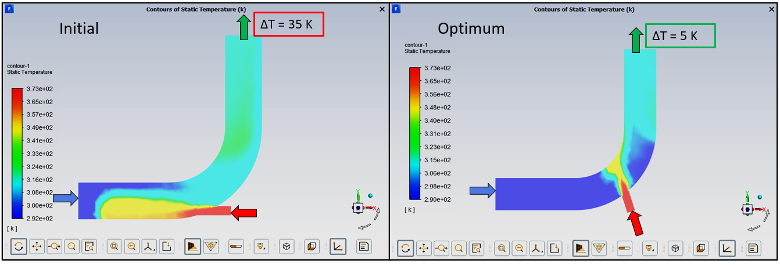
The working principle is simple; starting with a minimum number of evaluations, a response surface is constructed. This is used for predicting an approximate optimum. Next, the underlying analysis is evaluated to check the accuracy of the predicted value vis-à-vis the actual value. If the accuracy of the optimum is poor, Iliad will automatically generate and evaluate additional design points using machine learning. This is followed by re-calibrating the response surface. This process is continued until a global optimum of sufficient accuracy is achieved. This is called dynamic response surface-driven optimization. This strategy ensures a minimum number of analysis runs, sufficient accuracy, and a global optimum (as opposed to local optimum or small improvements). For example, using the RSO component in combination with Ansys Fluent for simulating the mixing of fluids resulted in 7 times better results with significant time savings.
Contact us today to see how Iliad’s Machine Learning capabilities and optimization engines can bring you improved performance and cost savings!